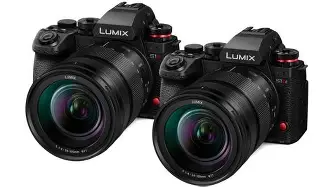
Difference Between Fujifilm X E5 and Panasonic Lumix S1 II Explained
The digital camera market has evolved into a landscape defined by highly specialized tools, where the choice between two models often depends more on ergonomic philosophy and sensor size than mere megapixel counts. Two of the most anticipated or discussed cameras in contemporary circles represent polar opposites of the mirrorless spectrum: the Fujifilm X-E5 and the Panasonic Lumix S1 II. While both are designed to capture stunning imagery and high-quality video, they cater to vastly different styles of photography and videography. One is a compact, rangefinder-style APS-C camera designed for portability and "soul," while the other is a robust, full-frame professional workhorse built for high-end production and reliability under pressure.
Understanding these differences is crucial for any creator looking to invest their hard-earned capital. A camera is more than just a box that records light; it is an interface between the photographer and the world. If that interface is too heavy, the photographer might leave it at home. If it is too small or lacks specific video features, it might fail to meet the demands of a commercial client. This article provides an exhaustive analysis of the Fujifilm X-E5 and the Panasonic Lumix S1 II, diving deep into their specifications, real-world performance, and the specific demographics they serve.
Detailed Product Analysis: Fujifilm X-E5
The Fujifilm X-E5 represents the fifth generation of a cult-favorite line. It is built upon the "minimalist" ethos that has defined the X-E series since its inception. Utilizing a rangefinder-style body with an electronic viewfinder (EVF) tucked into the top-left corner, it offers a discreet profile that is favored by street photographers, travelers, and those who want a high-performance sensor in a jacket-pocketable form factor.
At the heart of the X-E5 is typically the latest X-Trans CMOS sensor, an APS-C sized powerhouse that delivers a unique color science. Fujifilm users often choose this system specifically for the Film Simulations—in-camera color profiles like Acros, Classic Chrome, and Reala ACE that mimic the look of traditional analog film. The X-E5 focuses on the "joy of photography," featuring physical dials for shutter speed and exposure compensation, encouraging a tactile relationship with the exposure triangle. Despite its small size, it often shares the same processor and autofocus algorithms as Fujifilm’s flagship models, ensuring that while it looks retro, its internal performance is thoroughly modern.
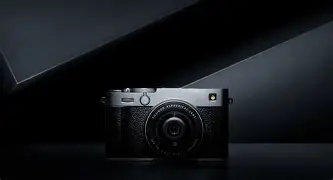
However, the compact nature of the X-E5 necessitates some compromises. The grip is shallow, making it less comfortable for long sessions with heavy lenses. The battery life, while improved in recent iterations, is physically limited by the small cell size required for the slim body. Furthermore, the heat dissipation is not as robust as larger models, which can limit extended 4K video recording times in warm environments. It is a camera for the intentional creator—the person who wants to document life without the gear getting in the way.
Detailed Product Analysis: Panasonic Lumix S1 II
In contrast, the Panasonic Lumix S1 II is a statement of professional intent. As a full-frame mirrorless camera based on the L-mount alliance, it is designed to compete at the highest levels of the industry. The S1 series has always been known for its "tank-like" build quality and class-leading video features, and the Mark II iteration refines this formula by adding phase-hybrid autofocus—a feature that was missing in earlier Panasonic models and now allows it to compete directly with the best from Sony and Canon.
The Lumix S1 II is significantly larger than the Fujifilm X-E5. This size is utilized to provide a massive, high-resolution EVF, a status LCD on the top plate, and a grip that can be held comfortably for twelve hours of shooting. The full-frame sensor offers a clear advantage in low-light performance and dynamic range, providing "cleaner" files when shooting in dimly lit venues or high-contrast landscapes. Panasonic’s strength has always been in the "hybrid" realm, and the S1 II is no exception, offering 10-bit internal recording, V-Log as standard, and professional monitoring tools like waveforms and vectorscopes that are rarely found in the Fujifilm X-E series.
Shop the latest Cameras & Photography picks on Amazon.
See Deals →The S1 II also excels in stabilization. Panasonic’s Dual I.S. system is widely considered the gold standard, allowing for handheld video shots that look almost as smooth as if they were on a gimbal. This makes it an ideal tool for wedding videographers, documentary filmmakers, and landscape photographers who want to leave the tripod behind. It is a heavy, purposeful machine that feels at home on a professional set or in a studio environment.
Comparing the Specs: APS-C vs. Full Frame
The most fundamental difference between these two cameras is the sensor size. The Fujifilm X-E5 uses an APS-C sensor (approximately 23.5mm x 15.6mm), while the Panasonic S1 II uses a Full Frame sensor (approximately 35.6mm x 23.8mm). This difference dictates the physical size of the lenses, the depth of field characteristics, and the low-light capabilities.
For the Fujifilm user, the APS-C sensor means a smaller, lighter overall kit. Lenses can be designed with less glass, making a three-lens kit easily manageable in a small shoulder bag. For the Panasonic user, the full-frame sensor provides a "shallower" depth of field, making it easier to isolate subjects from the background. It also provides a roughly one-stop advantage in noise performance, meaning an image shot at ISO 6400 on the S1 II will typically look as clean as ISO 3200 on the X-E5.
| Feature | Fujifilm X-E5 | Panasonic Lumix S1 II |
|---|