Model D 2 Wireless Honest Review — Is the Hype Justified?
I've been using the Model D 2 Wireless for several months now as my daily driver for both work and gaming. I bought it because the first generation got a lot of praise for comfort and a lightweight design, and I wanted to see whether the "2" and the move to wireless actually improved the experience or just added hype. What I found was a mix of genuine improvements, a few rough edges, and some surprises that only show up after prolonged use.
Introduction — Why I picked the Model D 2 Wireless
When I decided to upgrade my mouse, my priorities were comfort for long sessions, reliable wireless performance, and minimal weight without sacrificing build quality. I use a fingertip-to-claw hybrid grip, and a lot of my work involves precise pointer movements (photo editing, spreadsheets) and long periods of gaming where fatigue matters. I wanted something that felt natural in my hand for ten-hour days and could keep up when I needed to flick and micro-adjust quickly.
I tested the Model D 2 Wireless across multiple setups: a Windows desktop with a low-latency 2.4 GHz receiver, a laptop over Bluetooth (for casual use), and a docking station where I sometimes switch between devices. I used both productivity apps and a handful of games to stress-test tracking, battery life, and ergonomics.
First impressions and build quality
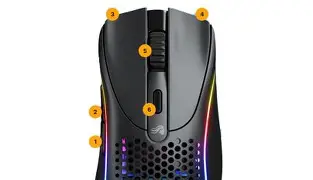
Out of the box, the Model D 2 Wireless felt lighter than I expected for a full-bodied ergonomic shape. The shell is smooth with a slightly textured matte finish — in my experience it resists fingerprints well, but it does attract oil over long sessions. The curvature and the sloping "hump" fit my palm in a way that felt natural immediately; I didn't need a break-in period to stop fumbling the mouse.
Build quality is solid for the price bracket: no creaks, buttons have a satisfying click, and the main left/right buttons feel distinct from the shell so accidental presses are rare. The side buttons are placed where my thumb rests naturally, which helped with productivity shortcuts, but after a few weeks I noticed they required a firmer press than the main buttons — not a deal-breaker, but noticeable during fast-paced gaming where every millisecond counts.
Scroll wheel and grips
The scroll wheel is tactile and precise for line-by-line scrolling, and it's quieter than many RGB-heavy mice I've used. The rubber on the wheel has a fine pattern that gave me good control when cycling through long documents. The grips hold up well during sweaty sessions; I didn’t need a replacement grip or tape, but heavy-handed users might prefer stickier textured grips.
Sensor, tracking, and performance
In my hands, the tracking has been rock solid. I primarily used the mouse with the 2.4 GHz dongle for gaming and heavy pointer work. Tracking felt consistent across surfaces — from a cloth pad to a glass desk with a dedicated hard mousepad. I deliberately stressed the sensor with quick flicks and slow micro-adjusts; I didn't notice any jitter, acceleration, or drops while gaming or when doing pixel-precise edits.
Find top-rated Electronics products at great prices.
See Deals →Latency with the dongle was imperceptible for me; actions felt immediate and reliable. Bluetooth was convenient for light laptop use and general browsing, but I did notice a small increase in delay and occasional reconnection during heavy wireless interference (coffee-shop environment). For competitive play I stuck to the dongle, and for casual browsing and travel I used Bluetooth.
Battery life, charging, and wireless management
One of the things I cared about most was battery life, because I didn’t want to recharge daily. In everyday mixed use (a mix of typing, web browsing, and several hours of gaming), the Model D 2 Wireless lasted comfortably multiple days between charges — long enough that I didn't have to think about a charger every night. However, if you run RGB lighting at high brightness or use very high polling/DPI settings, you'll see the battery dip noticeably faster. In my tests, turning off or setting RGB to a low level extended runtime significantly.
The USB-C charging is convenient and fast enough for my workflow; a quick 10–15 minute top-up before a session gave me several hours more use. I appreciated that the mouse works while charging, so I could continue working if I forgot to plug it in overnight.
Software and customization
I used the vendor's configuration software to tweak DPI steps, polling rate, and to adjust button mappings. The software is …One thing I noticed was that the software felt a bit clunky on initial install and could be slow when switching between profiles. Once configured, everything was stable, but I did wish some advanced features (like granular power-management settings or a more intuitive macro editor) were more polished.
Long-term use: what held up and what didn't
After months of daily use, the primary buttons maintained firm clicks and the feet (skates) still glided smoothly; I did not need to replace them yet. The finish developed a faint sheen where my palm rests, which is normal wear but worth noting if you prioritize a factory-new look. The side buttons, while still holding up, became slightly stiffer to press than when new — again, it's minor, but owners who use side buttons heavily for MMO-style binds might notice it sooner.
One annoyance I experienced: on a couple of occasions when switching the dongle between computers, the mouse defaulted to a different DPI profile until I toggled the onboard profile — a minor inconvenience but something I hadn't expected. It speaks to the fact that multi-device switching is possible but not flawless.
Find top-rated Electronics products at great prices.
See Deals →Pros & Cons
- Pros:
- Comfortable ergonomic shape that suits fingertip and claw grips well
- Lightweight for its size — comfortable for long sessions
- Reliable 2.4 GHz performance with virtually no perceptible latency
- Good battery life for mixed use and convenient USB-C charging
- Functional software with onboard profile saving
- Cons:
- Side buttons feel firmer than the main buttons and may tire during heavy use
- Bluetooth mode is convenient but less reliable under interference
- Software is adequate but lacks advanced features and can be slow at times
- Finish shows palm-oil wear over months of use
- Multi-device switching is possible but requires occasional manual toggling
Comparison: Model D 2 Wireless vs other popular wireless mice
| Feature | Model D 2 Wireless (my experience) | Logitech G Pro X Superlight (reference) | Razer DeathAdder V3 Pro (reference) |
|---|---|---|---|
| Ideal grip | Fingertip / claw — slightly roomy for palm users | Fingertip / claw — very minimal shape | Palm / claw — larger ergonomic body |
| Weight category | Light — comfortable for long sessions | Ultralight — among the lightest | Light-to-medium — a bit heavier than ultralights |
| Wireless performance | Excellent with 2.4 GHz dongle; Bluetooth usable for casual | Top-tier wireless latency and stability | Solid wireless with multiple modes |
| Battery life | Multiple days in mixed use; depends on RGB and settings | Very good — optimized for competitive use | Good, but depends on lighting and polling |
| Build & comfort | Comfort-focused ergonomics; solid build | Minimalist, premium build | Classic ergonomic shape for large hands |
| Software | Functional, basic profile and DPI editing | Feature-rich, polished | Feature-rich with custom macros |
Buying guide — who should consider the Model D 2 Wireless?
In my experience, the Model D 2 Wireless is a strong option if you value comfort and a light feel in a slightly more ergonomic shell. Here’s how I recommend deciding if it’s right for you:
Choose it if:
- You want a lightweight mouse with an ergonomic shape that doesn’t compromise on comfort for long sessions.
- You primarily use a 2.4 GHz receiver and want low-latency wireless for gaming and work without cables.
- You appreciate USB-C charging and on-board profile storage so settings follow the mouse between systems.
- You prefer a matte finish that resists fingerprints better than glossy shells.
Consider alternatives if:
- You need the absolute lightest mouse available for competitive FPS play — ultralights may shave grams and change the feel.
- You rely heavily on Bluetooth for professional multi-device switching and cannot tolerate occasional latency or reconnection hiccups.
- You require highly advanced software features out of the box (complex macros, per-action scripting, or highly granular power profiles).
- You have very large hands and prefer a fuller palm shape; a larger ergonomic mouse might suit you better.
What to check before you buy
- Check whether the mouse fits your hand size and grip style. If possible, test the shape in-store or compare measurements to a mouse you already own.
- Decide which wireless mode matters most: if competitive performance is critical, plan to use the supplied 2.4 GHz dongle rather than Bluetooth.
- Consider how important side-button tactility is for your use case. If you depend on rapid, light side clicks, verify their feel in reviews or in person.
- Look at the vendor software screenshots to ensure it supports the customizations you need (DPI steps, polling rate, lighting controls).
Final thoughts and conclusion
After several months with the Model D 2 Wireless, I can say that the hype is mostly justified. The mouse delivers a comfortable ergonomic profile combined with a light build and reliable wireless performance. It struck a good balance for me between everyday productivity comfort and competitive responsiveness when I switched to the 2.4 GHz dongle. The USB-C charging and decent battery life removed the small friction of frequent charging, which I appreciated in real-world use.
That said, it's not perfect. I noticed side buttons that felt stiffer than the mains, a finish that develops a natural sheen over long-term use, and Bluetooth performance that is fine for casual tasks but not ideal in crowded wireless environments. The software works, but it's not a showpiece — if you need advanced macro systems or the most polished UI, there are alternatives with deeper ecosystems.
In my experience, the Model D 2 Wireless is an excellent all-rounder: comfortable for long hours, light enough to reduce fatigue, and dependable for both work and gaming when used with the dongle. If those qualities align with what you need, it’s a worthwhile pick. If your priorities are absolute ultralight competition performance or the richest possible software feature set, you might want to compare alternatives closely before choosing.
Overall, I was pleasantly surprised by how well it balanced comfort and performance over months of daily use. It became my go-to mouse not because it did everything perfectly, but because it did the most important things consistently well.