Should You Buy the Tp Link M8550 5G Mobile Hotspot in 2026? A Deep Dive
Introduction
I've been using the Tp Link M8550 5G Mobile Hotspot for several months now, carrying it between home, co-working spaces, road trips, and the occasional international trip. I bought it because I wanted a simple, portable way to give my laptop and a handful of devices reliable internet without relying on cafés or flaky hotel Wi-Fi. After living with it long-term—testing speeds, battery life, firmware quirks, and real-world reliability—I want to share what I learned so you can decide whether it still makes sense to buy in 2026.
What the M8550 Promises (and why I bought it)
When I first researched the M8550, the selling points were obvious: a dedicated 5G modem in a pocketable package, dual-band Wi‑Fi for multiple devices, and a nicer mobile experience than tethering to a phone. I was after a hotspot that would keep my laptop, a tablet, and a couple of phones connected during a full day of meetings and streaming without tethering to my phone’s battery. I wanted something more robust than a phone hotspot but still small enough to fit in my bag.
My Setup and Usage Patterns
For context: I used the M8550 on a mainstream North American carrier's 5G network in a mid-sized city, with occasional trips to suburban and rural areas. My typical usage pattern was a 9–10 hour day of mixed work: video conferencing, cloud file sync, Slack/Teams, and some streaming. I also tested it as a temporary router for short stays in hotels and for a weekend road trip where hotel Wi‑Fi was unreliable.
Real-World Performance
What I found was a mix of solid performance and a few practical compromises.
Speed and Latency
In strong 5G coverage (downtown and major highway corridors), the M8550 consistently delivered download speeds in the mid-hundreds of Mbps—often enough for a stable 1080p video call and for downloading large files while I worked. On particularly good days I saw bursts higher than that; on the flip side, in buildings or fringe coverage the speeds dropped to typical 4G LTE comfort levels. Latency felt fine for normal work: video calls were stable and I didn’t notice gaming-grade differences, but if you need very low latency for competitive gaming, a wired connection or a high-tier fixed connection still wins.
Range and Number of Devices
The Wi‑Fi range covered my small hotel room and a modest-sized coworking desk area without dropping, and I could reliably connect my laptop and two phones with a few tablets in the mix. I did notice that when I pushed it to its practical limits (a half-dozen devices doing heavy background sync and streaming simultaneously), throughput per device declined predictably. For my use—3–4 active devices—it performed well. If you're powering a family of smart home devices or many simultaneous streams, a dedicated home router or a hotspot with higher specs may be better.
Battery Life and Charging
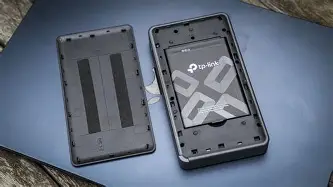
Battery life is where I had both pleasant surprises and small annoyances. On average, the M8550 lasted me a full workday of mixed use—roughly 8–12 hours depending on carrier signal and how many devices were connected. I could get a full day on lighter use. Recharging via USB‑C in the evening was convenient; I used a 30W charger and it topped back up in a couple of hours. One thing that bothered me: the device gets warm under heavy use and charging simultaneously, and while this didn't impact performance in my months of use, I prefer devices that stay cool during long streaming sessions.
Shop the latest Laptops & Computers picks on Amazon.
See Deals →Software, UI, and Management
I appreciated the simple web interface and companion app for quick checks: connected devices, data usage, and basic settings. The M8550’s UI felt more polished than older hotspots I've used, but it’s not as full-featured as a consumer router's firmware—there's no advanced QoS, parental controls are basic, and the OS updates were infrequent. In my experience, those trade-offs are fine for a travel hotspot, but if you want granular network control, expect to pair it with your own router or choose a different solution.
Build Quality and Portability
The unit is compact and feels solid in the hand. After months tossed in a backpack and used on flights, I didn't have any durability issues. The small screen made quick checks easy (signal bars, battery percent, connected device count), and the physical buttons were responsive. Portability is a major plus: I could easily slip it into a small pouch and forget it was there until I needed it.
Pros & Cons
- Pros
- Reliable 5G connectivity where coverage exists—fast enough for HD conferencing and multipl…
I also appreciated how straightforward carrier setup was. In my case I used a physical SIM and the device negotiated service with my carrier without fuss. The M8550's ability to fall back gracefully to 4G LTE when 5G wasn't available kept me online in places where phone tethering would have been flaky.
What Disappointed Me (Specifics)
There were disappointments too. The device warms noticeably under heavy load, and while that didn't cause failures, it made me wary to leave it charging in tight spaces. The firmware update cadence was slow—over months I saw only one minor update—which makes me uneasy about security and long-term support. I also missed a few convenience features I take for granted on routers: better device prioritization (QoS), a guest SSID with isolated network options, and easy VPN passthrough. For business users who need those features, this feels more like a short-term solution than a long-term replacement for a home router.
Buying Guide: Should You Buy the M8550 in 2026?
If you're considering the M8550 in 2026, here's how I think about whether it's right for you—based on my months of hands-on use.
Find top-rated Laptops & Computers products at great prices.
View Offers →Who should buy it
- Mobile professionals who need reliable internet for a laptop and a couple of devices while traveling.
- People who frequently find themselves in places with unreliable public Wi‑Fi and want a private, easy-to-manage connection.
- Users who want a simple, portable solution instead of co-opting a phone for tethering (saves phone battery and avoids interruptions).
Who should not buy it
- Families or households that need to run many devices concurrently as a primary home internet replacement—this device is better as a travel or backup solution.
- Users who need advanced network features (deep QoS, advanced VPN options, VLANs) built into the hotspot.
- Anyone who expects continuous firmware updates and long-term software support—if that’s a priority, consider business-class alternatives.
Key questions to ask before buying
- Does my carrier support the device? Check carrier compatibility and bands—5G performance depends heavily on local coverage and the bands the hotspot supports.
- How many devices will I connect? If you routinely have 8+ heavy devices, this may not meet your needs.
- Do I need advanced network features? If you do, plan to pair the hotspot with your own router or choose a different product.
- How important is battery life vs. portability? I found the balance good, but if you need multi-day battery life without charging, look for larger models.
My Verdict: Buy It If It Matches Your Use Case
After several months with the Tp Link M8550, my conclusion is practical: I would buy it again for my use case. It solved the exact problem I had—reliable, portable internet for a few devices while on the move—without complicating my setup. The performance in decent 5G coverage is very usable for professional work, the battery life is good for a day of travel or meetings, and the design is pocket-friendly.
That said, it’s not perfect. If your needs include lots of simultaneous heavy devices, advanced networking features, or you expect long-term, enterprise-level software support, then you should consider more expensive, feature-rich hotspots or a compact travel router paired with a 5G USB modem. For what it is—a solid consumer 5G hotspot aimed at travelers and mobile professionals—the M8550 delivers strong value in 2026.
Final Thoughts
In my experience, the M8550 strikes a thoughtful balance between portability, battery life, and everyday 5G performance. I was surprised by how well it handled video calls and large file syncs without turning into a liability mid-day. One thing that bothered me was the occasional warmth under load and the slow software update cadence. Those are worth weighing depending on how long you expect to rely on the device.
If you travel a lot, run a small mobile kit, or want a clean separation between personal phone use and a dedicated internet device, the M8550 is still a practical and convenient choice in 2026. If you need a full-featured router or plan to power a heavy multi-user household, look at the higher-end alternatives instead. Ultimately, what sold me was the simplicity: it worked when I needed it, saved my phone battery, and made remote work less stressful—exactly what I needed it to do.