The Real Truth: Beyerdynamic Dt 72 Ie or Earfun Clip?
Introduction
Choosing earphones today means balancing sound, comfort, convenience and durability. Two products that sometimes appear in the same consideration set are the Beyerdynamic Dt 72 Ie and the Earfun Clip. They occupy different corners of the audio market: one leans toward the heritage of a professional audio brand, the other toward accessible, modern wireless convenience. This article unpacks what each offers, how they perform in everyday situations, and which buyer profiles will benefit most from each product.
The goal is practical and actionable: present clear differences, realistic use cases, and guidance on which set of trade-offs makes sense for different listeners. The focus stays on real-world performance rather than marketing claims, and the analysis highlights the kinds of details buyers typically care about — fit, isolation, sound character, call quality, battery/portability, and long-term durability.
At a glance: how these two compare in purpose
Before a deep dive, it helps to frame each product's intent. Beyerdynamic has a long-established reputation in studio and professional audio. A product bearing the Beyerdynamic name and a model like Dt 72 Ie will generally emphasize sound fidelity, neutral-to-analytical tuning, and robust physical construction tailored to listeners who value clarity and accuracy. Earfun, by contrast, is a consumer-first brand that emphasizes convenience, features like wireless connectivity and strong battery life, and a value-oriented price-to-performance balance. The Earfun Clip is designed primarily for active, mobile users who prioritize wireless freedom, secure fit and modern conveniences like hands-free calling.
Detailed review: Beyerdynamic Dt 72 Ie
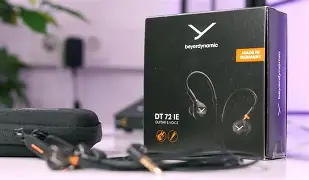
The Beyerdynamic Dt 72 Ie positions itself as a serious listening tool for those who prioritize sound quality and faithful reproduction. Listeners who come from studio work, critical listening, or audiophile curiosity will find the emphasis on tonal balance and detail retrieval appealing.
Design and build
Beyerdynamic historically favors sturdy materials and conservative styling. The Dt 72 Ie reflects this approach with a construction that prioritizes longevity and a no-frills aesthetic. The housings are typically compact and engineered to sit securely in the ear without being flashy. Cables and connectors on wired variants from Beyerdynamic tend to be serviceable and often detachable; this reduces long-term failure points and allows for cable replacement or upgrades.
Sound signature and performance
The Dt 72 Ie targets listeners who want a balanced presentation. Its tuning aims to reveal mids and highs with clarity while keeping bass controlled rather than exaggerated. This translates into excellent performance for acoustic music, vocal-centric material, and studio monitoring tasks where revealing detail is more valuable than bass thump. In practical terms, the Dt 72 Ie helps listeners pick out instrumentation within dense mixes and evaluate recordings for subtle imperfections, which is useful for content creators and discerning listeners.
Fit, isolation and ergonomics
Comfort and isolation are often prioritized because they directly affect long listening sessions. The Dt 72 Ie typically provides stable in-ear fit with a range of ear tips to tune isolation and seal quality. For users who need passive isolation — for travel or noisy office environments — a good seal will significantly reduce ambient noise. The physical ergonomics also support extended wear without causing ear fatigue for many users, making the model suitable for long studio sessions or commuting.
Real-world use cases
- Studio and monitoring: The product's accurate midrange and revealing treble help with mixing reference and critical listening.
- Commuting with a preference for neutral sound: Listeners who don’t want exaggerated bass while traveling will appreciate the balanced tuning.
- Content creation: Helpful for podcasters and videographers who need earphones that let them catch artifacts and inconsistencies.
Pros & Cons
- Pros:
- Accurate, balanced sound useful for critical listening
- Solid build quality and straightforward, durable design
- Good passive isolation with proper eartips
- Comfortable for long listening sessions for many users
- Cons:
- Less bass-forward tuning may disappoint bass-hungry listeners
- Wired design limits convenience compared with wireless alternatives
- Fewer “consumer” features (no onboard mic/ANC/wireless) depending on configuration
- Potentially higher price positioning relative to value-focused brands
Detailed review: Earfun Clip
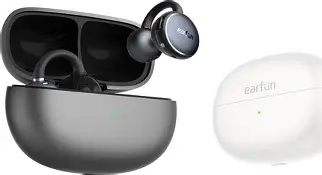
The Earfun Clip focuses on mobility and features aimed at active lifestyles. It competes in the pocket-friendly, wireless segment where battery life, secure fit, and reliable Bluetooth performance matter most. The design prioritizes a low profile, easy pairing and resilience for workouts or daily commutes.
Discover deals on Audio & Headphones — updated daily.
View Offers →Design and build
Earfun typically designs products with ergonomic earhooks or stable in-ear contours to keep the buds in place during movement. The Clip is intended to be compact and lightweight; materials are chosen to strike a balance between durability and comfort. The design often includes an IP rating or some degree of sweat/water resistance to make the product suitable for gym use and outdoor runs.
Audio performance and features
In this category, the Earfun Clip will likely emphasize a consumer-friendly sound signature: slightly boosted bass, lively midrange for vocals, and a polished treble that highlights energy without sounding clinical. This makes the Clip a great match for pop, hip-hop, podcasts and general media consumption. Key advantages include wireless convenience, decent battery life for daily use, and features such as built-in microphones for calls and basic voice assistant support.
Fit, isolation and ergonomics
The Clip’s form factor aims for a locked-in feel during activity. Buyers who prioritize exercise will value a secure fit and lightweight construction. Isolation is often less aggressive than with high-isolation wired IEMs, because a degree of ambient awareness is useful while exercising outdoors — yet the Clip should still provide enough passive isolation to improve music immersion during typical commutes.
Real-world use cases
- Workouts and running: Secure fit and water/sweat resistance make it a practical training companion. …
- Confirm the fit and eartip options; a good seal changes perceived bass and isolation.
- Decide whether battery life and wireless codecs matter for the listening environment.
- Consider portability needs: case/clip size and how the product stows while commuting.
- Look for warranties and the brand’s service options, particularly for long-term ownership.
- Read real-world user feedback on fit and mic performance as these vary more than advertised specs.
1. What is the primary use?
If the primary activity is studio work, music production, or analytical listening at home, a product tuned for neutrality and resolution — like the Dt 72 Ie — tends to be the better tool. If the main use is exercising, commuting, or casual media consumption where wireless convenience and ruggedness matter, then the Earfun Clip is the more suitable pick.
2. Is wireless freedom important?
Wireless earphones remove the tangle of cables and allow freedom of movement. For phones, workouts, and multitasking, wireless is a decisive advantage. For users who spend most listening time seated at a desk or connected to high-quality source equipment, a wired solution often offers better value in sound per dollar and removes battery concerns.
3. How important is absolute sound accuracy?
Buyers seeking accurate tonal balance and a revealing presentation should prioritize a neutral-sounding wired IEM. Those who prefer bass impact and a lively presentation for modern music will likely favor a consumer-tuned wireless earbud.
Find top-rated Audio & Headphones products at great prices.
See Deals →4. Durability and future-proofing
Wired earphones from established pro-audio brands are frequently designed for serviceability and long life; cables can be swapped and spare parts may be available. Wireless devices are more convenient but become outdated in terms of battery performance and may be less repairable.
5. Portability and daily routine
For frequent travelers and gym-goers, the convenience of wireless pairing and a compact charging case (or a clip-based battery) often outweighs the audio performance gap. Conversely, if listening is mostly at home with a preference for long sessions, wired options remove the need to manage charging cycles.
6. Phone calls and microphone quality
If frequent calls are a necessity, wireless options generally perform better because they include integrated microphones optimized for speech. Wired in-ear monitors can work for calls but may rely on passive inline mics that vary in quality.
Checklist before purchase
Practical scenarios: which performs better where?
- For a commuter who listens to podcasts and music while switching between walking and public transport, the Earfun Clip’s wireless convenience, secure fit and call capabilities will be more practical. - For a musician or audio professional editing mixes or checking vocal takes, the Dt 72 Ie’s neutral balance and revealing presentation will be the more useful tool. - For a gym-goer who wants solid sound and weather resistance without fuss, the Earfun Clip is preferable. - For someone who values longevity and the possibility of repairs or cable replacement, the wired Beyerdynamic option holds an advantage.
Conclusion
The “real truth” is that neither earphone is strictly superior in all respects — they serve different needs. The Beyerdynamic Dt 72 Ie aligns with listeners who demand fidelity, durability and an honest representation of audio. It is a practical choice for critical listening, studio reference and buyers who prefer wired simplicity. The Earfun Clip excels for mobile, active lifestyles where wireless convenience, secure fit and modern features like hands-free calling matter most. It is designed to be easy to live with and dependable during movement.
Buyers should prioritize use case above brand appeal: choose the Dt 72 Ie if analytical sound and long-term serviceability are the priorities; choose the Earfun Clip if wireless freedom, portability and everyday convenience are essential. Both deliver meaningful value in their intended contexts, so the best choice depends on which trade-offs the buyer is willing to accept.